
The Shadow Gap Paradox: Rethinking How We Learn
Written by
Nikhil Jumbad
Shadow Gap Paradox (0:00-0:40)
Introducing Gradus — an adaptive learning system that evolves with you.
Most learning platforms say they personalize. What they really mean is that they route you into one of three fixed tracks based on a diagnostic test you took once. That isn't adaptation — it's slightly more elaborate sorting.
Genuinely personalized learning requires a system that responds to how a specific learner processes a concept right now, not how a thousand other students did six months ago. We started Gradus because we realized that the current architecture of education is structurally incapable of this level of responsiveness.
Why the Status Quo of Learning is Broken
Modern education systems—whether schools, universities, or online platforms—are built on a static architecture: one course, designed once, delivered to millions. The assumption is that all learners start at roughly the same baseline, progress at roughly the same pace, and respond to roughly the same explanation. None of those assumptions are true.
Every learner differs across at least six dimensions that a static system is blind to: prior knowledge (one learner lacks prerequisites while the next finds the same content redundant), learning pace (some need slow repeated exposure, others accelerate), cognitive preferences (visual vs. textual, intuitive vs. formal), engagement patterns (drop-offs are individualized—there is no single "hard section"), goal orientation (exam prep and deep mastery are entirely different journeys), and forgetting curves (revision needs are never the same person to person).
Platforms optimize for content delivery—pre-recorded videos, fixed playlists, and standardized quizzes—because that's what scales. And it does scale. Just not for learning.
The result? We're wasting the only resource a student can't buy more of: time. Advanced learners stay trapped in material they already know, sliding toward disengagement. Struggling learners get pushed forward on shaky foundations, compounding confusion that stays invisible until it's too late. And educators who want to fix it face an operational nightmare—stitching together a dozen disjointed tools to build anything resembling a personalized experience.
Learning is not a distribution problem—it is a cognitive adaptation problem.
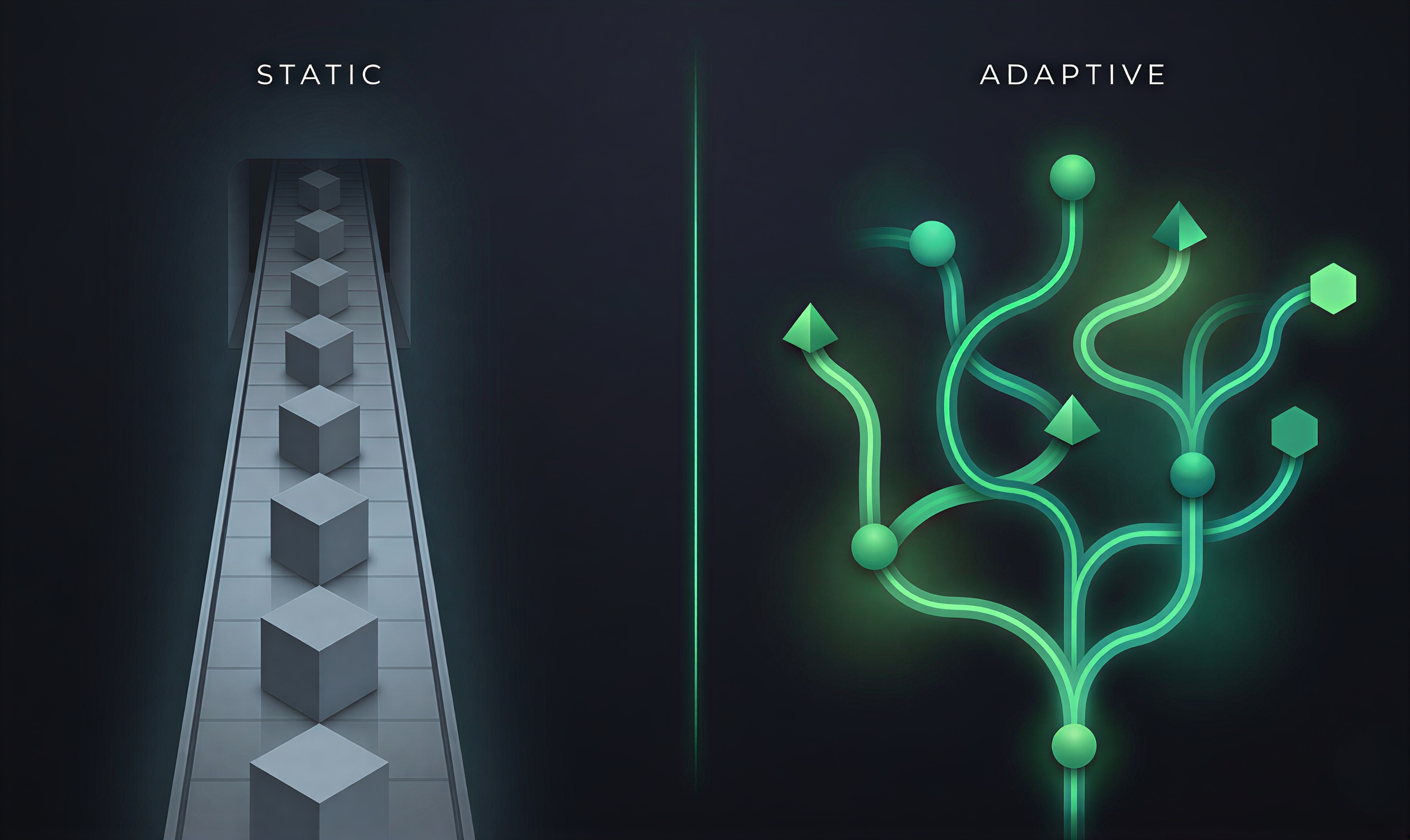 Figure 1: Traditional systems force diverse learners through a single rigid path; Gradus builds a unique circuit for every student.
Gradus: An Architectural Response
Gradus is a direct response to these structural failures. Our goal is to build a system where the learning experience evolves in real-time alongside the learner—not just at the surface level of recommending the next video, but across six interdependent layers that have remained static in every learning platform built before:
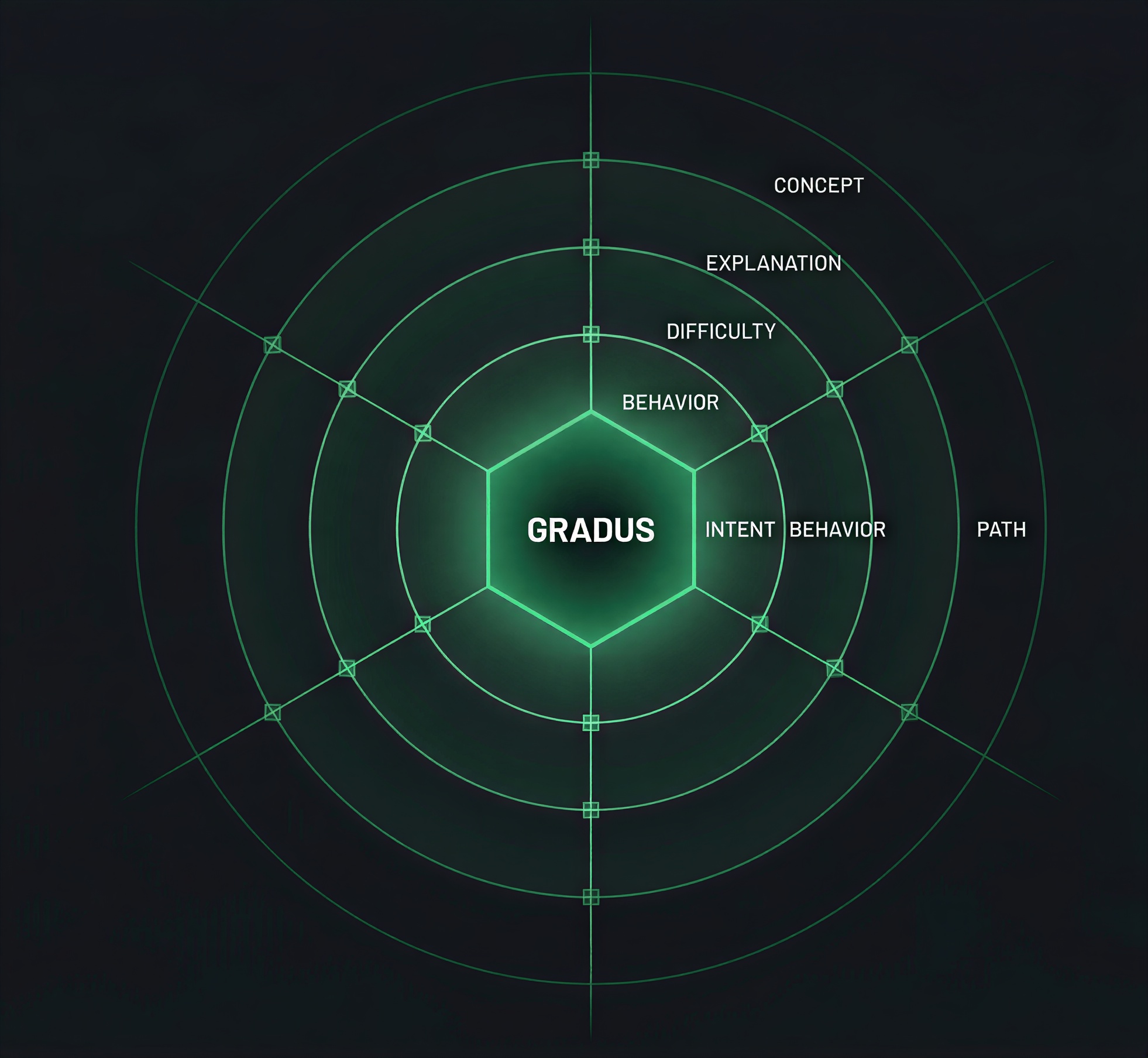 Figure 2: The Gradus technical stack. Rather than a flat course, Gradus optimizes across six dimensions of the learner's cognition simultaneously.
| Layer | What Gradus Adapts |
|---|---|
| Path | The sequence of concepts a learner follows |
| Concept | Which specific gaps are targeted for reinforcement |
| Explanation | How a concept is framed and delivered |
| Behavior | What your actions signal about your understanding |
| Difficulty | The cognitive load and challenge level at any moment |
| Intent | Whether you're preparing for an exam, building mastery, or exploring |
Most systems don't adapt along any of these dimensions. Gradus adapts across all six simultaneously.
From Static Paths to Living Learning Journeys
We've moved away from fixed, linear courses. In Gradus, a "course" is a living pathway that evolves based on what you understand and how your behavior changes. Two learners starting on the same topic may take completely different paths as the system dynamically slows down, accelerates, or reroutes to ensure mastery.
Concept-Level Adaptation (Not Just Progress Tracking)
Most systems track completion: videos watched or quiz scores. Gradus operates at the level of conceptual understanding. We ask what specific sub-concepts you haven't mastered yet, allowing for targeted reinforcement—focusing on a single misunderstanding—rather than forcing you to repeat an entire unit you mostly understand.
Reframing: Same Concept, Different Delivery
Not every explanation works for every learner. Some need step-by-step breakdowns; others need high-level analogies or practice-driven intuition. Gradus dynamically adjusts how a concept is explained based on the learner—not by simplifying or shortening, but by adapting the form and representation of knowledge itself. If a structured, sequential breakdown isn't landing, the system shifts to an intuitive, big-picture framing or an application-driven problem set. The goal is reduced cognitive overload for beginners and zero redundancy for advanced learners.
Open Video, Transformed Into Active Learning
This is the practical bet most learning platforms haven't made. Instead of building a walled garden of proprietary content, Gradus works with the open educational video that already exists—YouTube lectures, creator content, university recordings—and layers real adaptive intelligence on top of it. You don't need a curated library. The best technical content in the world is already out there. Gradus makes it actually teach.
Behavioral Intelligence: Reading the Invisible Signals
Gradus does not rely only on explicit inputs like quiz scores. It continuously interprets behavioral signals: rewatching a segment signals confusion; skipping ahead signals prior knowledge; time spent on a section reveals depth of processing versus surface-level difficulty. These signals allow the system to adapt even when the learner doesn't explicitly indicate they're struggling—responding not just to what you say, but to what you do.
Dynamic Difficulty and Intent-Awareness
Difficulty adjusts in real-time, creating a balance that prevents frustration while ensuring foundations are solid. Furthermore, the system adapts to your specific learning intent: an exam preparation path is focused and efficient, while a mastery path allows for deeper exploration. Your time is always aligned with your specific objective.
Teaching That Scales—Without the Overhead
This is the problem that prevents most educators, institutions, and corporate L&D teams from personalizing at all. Building adaptive learning currently means hiring a team to hand-craft multiple content paths, maintain separate assessment banks, and track individual learner progress across tools that don't talk to each other. A dean deploying a program to 800 students has no operational path to personalization. A corporate L&D head trying to upskill 3,000 employees across roles faces the same wall. Gradus eliminates this bottleneck. A creator uploads video once. Gradus generates the structured notes, adaptive assessments, and engagement layers automatically. Personalized teaching at scale becomes a software problem, not a staffing one.
A Structural Shift in Learning Design
We view Gradus as a closed-loop system: you interact, the system interprets the signals, and the experience is adjusted in real-time. Unlike traditional systems where feedback comes at the end, Gradus adapts during the learning process.
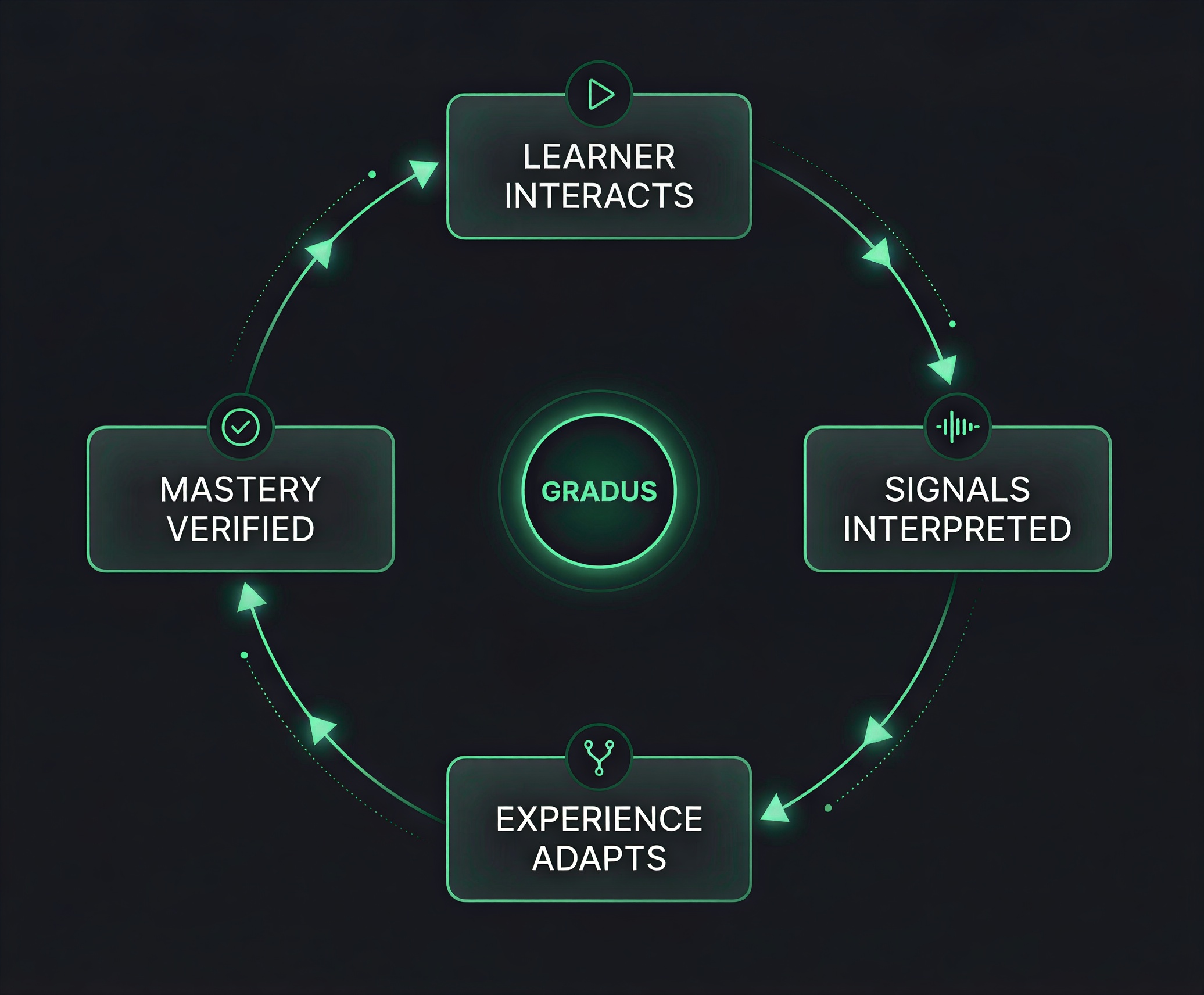 Figure 3: The Active Learning Loop. Gradus interprets behavioral and conceptual signals to reframe explanations and pathways in real-time.
| Traditional Systems | Gradus |
|---|---|
| Fixed curriculum | Dynamic pathways |
| Completion tracking | Understanding tracking |
| Same content for all | Personalized content flow |
| Delayed feedback | Real-time adaptation |
| Passive consumption | Active learning loop |
| Generic explanations | Context-aware explanations |
| Uniform experience | Multi-dimensional personalization |
For Students: From Passive Consumption to Active Mastery
For Students (0:40-1:17)
Most students don't fail because they didn't study. They fail because they studied inefficiently—spending hours on material they already understood, glossing over the specific sub-concept that would have made everything click. We watch lectures, take notes, and complete modules, yet leave with the same lingering feeling: "I studied this, but I don't fully get it." That feeling is not a personal failure. It's an architectural one. Most learning systems are designed for content access, not cognitive clarity.
Gradus shifts this entirely. For a student, it means the system aligns with your cognition, not the other way around.
From Starting Friction to Guided Flow
One of the most overlooked challenges a student faces isn't learning a topic—it's starting one. The "blank page" of a new domain usually leads to random searches and fragmented resources. Gradus solves this by transforming a vague intent like "I want to learn this" into a structured, adaptive learning pathway from day one. Your path isn't a playlist; it's a conversation. It identifies what you already know, determines necessary prerequisites, and organizes the most relevant resources—all without you having to manually guess the correct order of concepts. You are guided from the very first step.
Concept-Level Mastery vs. The Illusion of Progress
A major issue in modern learning is the "illusion of progress"—the feeling that completing a video equals mastery. You might understand 70% of a topic but miss a critical 30%, creating compounding gaps that stay hidden until an exam. Gradus directly addresses this by focusing on concept-level understanding. By isolating specific sub-concepts rather than entire topics, it identifies exactly where you are struggling and reinforces only what is necessary. This ensures no more blind spots; you build knowledge that is structurally sound, not just superficial.
Learning at the Right Pace
Students often fall into two extremes: feeling overwhelmed when the pace is too fast, or disengaged when it's too slow. Gradus dynamically balances this—slowing down when deeper understanding is needed and accelerating when concepts are already mastered. Progress feels natural and sustainable. You are neither rushed nor held back.
The Adaptive Dialogue: Same Concept, Reframed for You
When you re-watch a specific 20-second clip three times, the system notices. When you skip a "simple" explanation, it registers that too. Gradus reacts before you even have to ask for help. If the current explanation isn't clicking, the system reframes it in real-time—shifting from a formal breakdown to an intuitive analogy, or from theory to a problem-driven approach. This eliminates the frustration of "one explanation for all" and reduces dependency on hunting for "another explanation" from an external source.
Turning Passive Viewing into Active Proof
Traditional revision is inefficient—we re-read notes and re-watch lectures on things we already know. Gradus transforms this into a precision-driven process. It surfaces weak areas automatically and revisits only the concepts you are likely to forget. Through continuous interaction—questions, quizzes, and immediate feedback—the system moves you from watching to understanding, and from completing to mastering.
Reduced Study Fatigue
Inefficient learning leads to longer study hours, repeated relearning, and frustration from a persistent lack of clarity. By optimizing what, how, and when you learn, Gradus reduces unnecessary effort and shortens learning cycles. Studying becomes productive instead of exhausting.
For Institutions: From Standardized Delivery to Intelligent Learning Systems
For Institutions (1:17-1:51)
Institutional education operates within a structural paradox: we defined standardized curricula for equity, yet standard delivery creates variable outcomes. The impossibility of personalizing at scale means teaching is optimized for the "average" student, leaving struggling learners behind and advanced students under-challenged.
For the first time, institutions can see learning—not just measure it.
Gradus solves this by shifting the institutional role from managing content delivery to defining learning intent.
The Shadow Gap Paradox
One of the most critical challenges in education is the "shadow knowledge gap"—small misunderstandings in Week 2 that compound into conceptual failure by Week 12. Traditional systems miss these because evaluation is periodic and surface-level. Gradus provides deep, concept-level visibility across an entire cohort. It brings shadow gaps into the light the moment they form, enabling proactive intervention before the damage is done. Use granular metrics—not just marks, but understanding maps—to see exactly where the learning breakdown began.
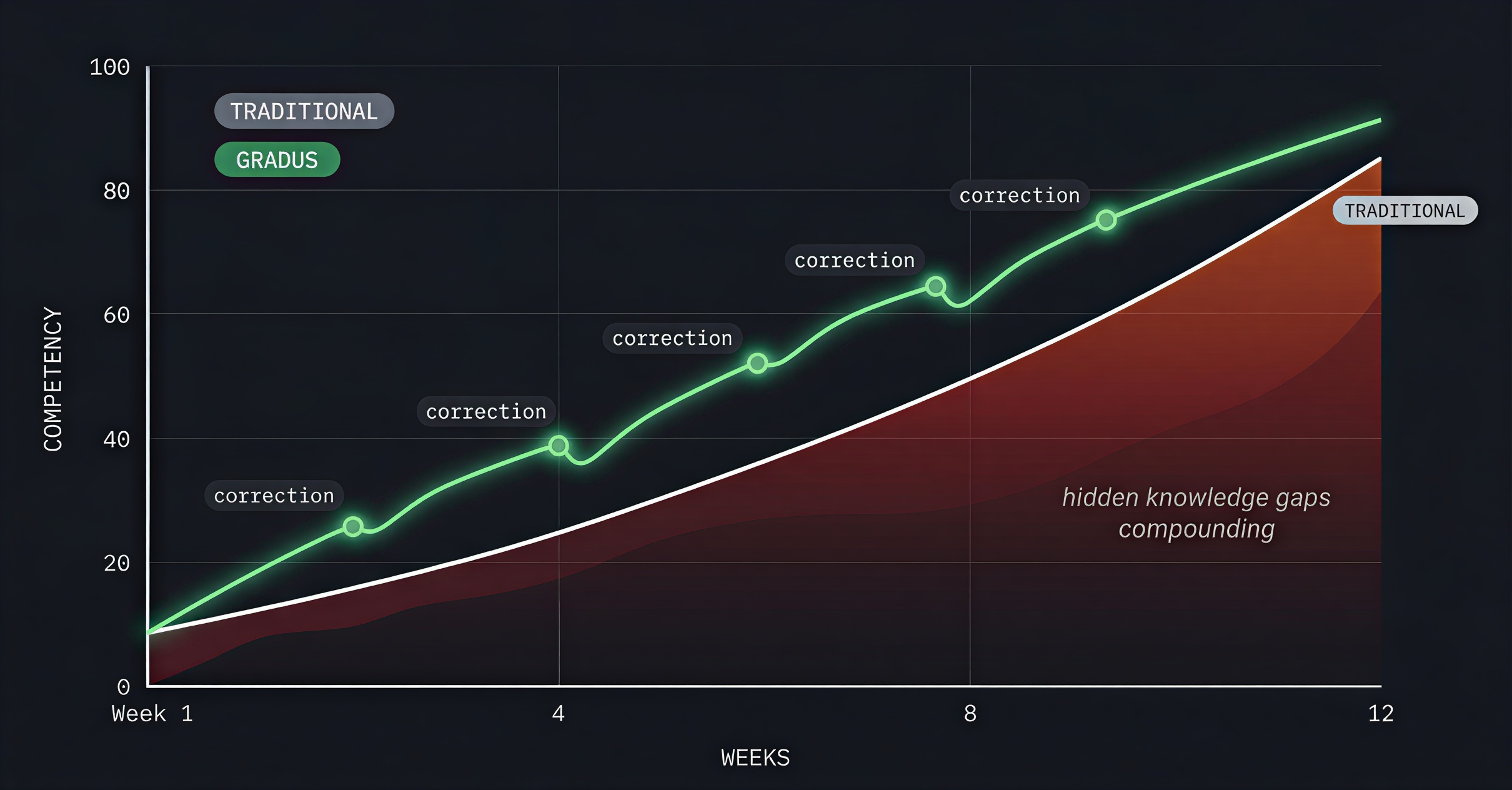 Figure 4: The Shadow Gap Paradox. While traditional progress looks steady, it often masks a growing "shadow area" of misunderstanding. Gradus surface and fixes these gaps at the point of origin.
Educators as Orchestrators
Gradus does not replace educators; it amplifies their highest-value skill: mentorship. By automating the repetitive delivery of explanations and assessments, faculty are freed from the operational overhead of course management. They transition from "content deliverers" to "learning orchestrators," spending their time on high-impact interventions and strategic guidance. Professors remain the central control layer, using system insights to emphasize specific concepts or re-route learning paths in real-time. Instead of a generic lecture, a professor walks into a hall knowing exactly which sub-concept 60% of the class failed that morning—and addresses it immediately.
Defining Outcomes, Not Pathways
Institutions define the "what"—program outcomes, reference materials, and learning objectives. Gradus manages the "how," structuring the primary journey and adaptive sequence for each student. This shift allows a dean or L&D head to maintain absolute institutional control over academic standards while ensuring that every student follows a path tailored to their specific cognition.
Scalable Precision: Predictable Success
Traditional education enforces standardized teaching and accepts variable outcomes. Gradus reverses this: standardized outcomes achieved through personalized experiences. This leads to reduced performance variance and more equitable success across large student cohorts. Equity in Gradus means that every learner reaches their maximum potential, not just a minimum standard—allowing high-performers to "leap" ahead without being tethered to the group pace. For decision-makers, this translates to faculty scalability without burnout. Personalized teaching at scale is no longer a human resource problem; it's an architectural achievement.
For Organizations: From Static Training to Adaptive Workforce Intelligence
For Organizations (1:51-end)
Modern organizations operate in environments where knowledge is the primary currency, yet training systems remain fundamentally static—onboarding modules, generic certifications, and scattered SOPs that provide limited visibility into actual understanding. The result is "Search Culture": employees who know where the document is, but don't internalize the process.
Gradus, powered by Genome, transforms this into "Mastery Culture."
Genome: The Knowledge DNA
Most companies don't have a knowledge problem; they have a retrieval and retention problem. Genome acts as the foundational engine that ingests fragmented documents, internal tools, and tribal knowledge to bridge this gap. It structures the organization's "Knowledge DNA" into a unified source of truth. But while Genome creates the structure, Gradus makes it teachable. When a process changes at the source, Gradus automatically reshapes the learning experience, ensuring employees don't just "find" information—they master how the organization operates.
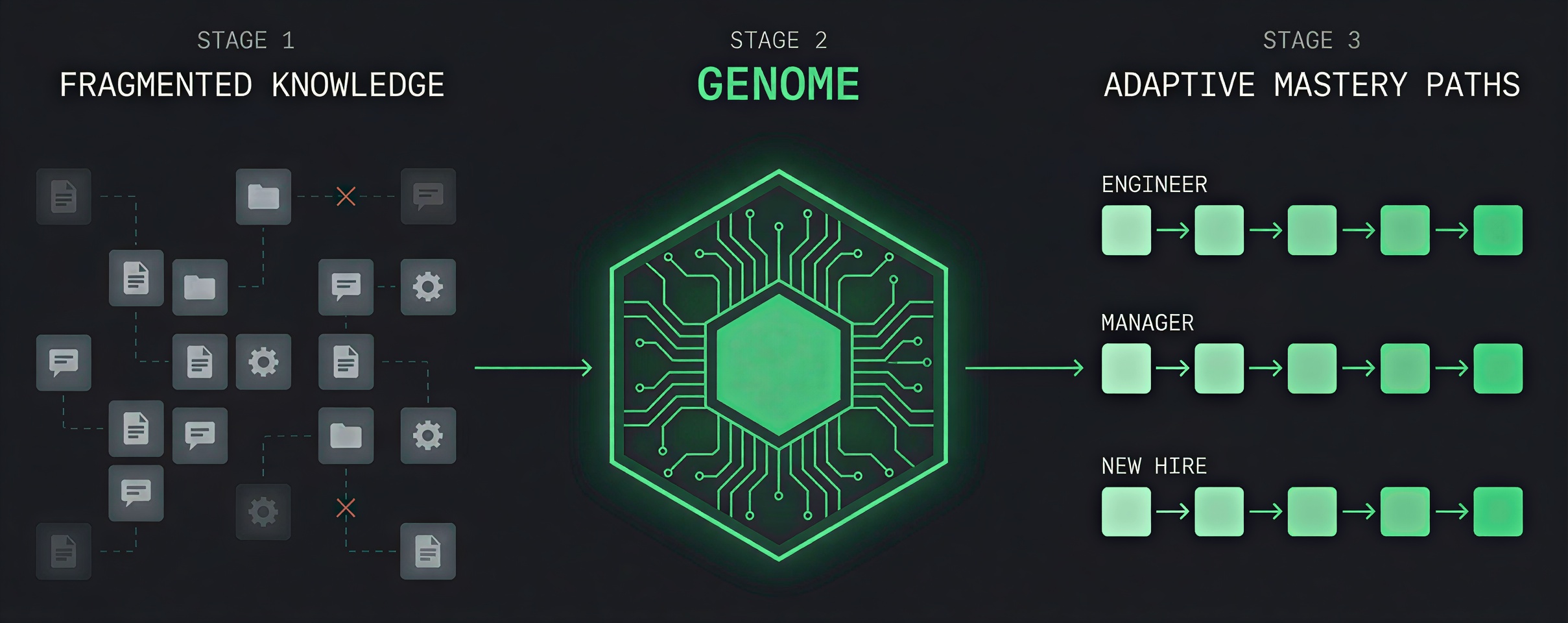 Figure 5: Transforming Search Culture into Mastery Culture. Genome provides the structured data that Gradus uses to build role-specific mastery paths.
Accelerating Time-to-Productivity
In enterprise, the only metric that matters is how quickly a hire becomes fully productive without operational errors. Traditional onboarding is slow because everyone goes through the same "Corporate 101" regardless of prior experience. Gradus optimizes for time-to-productivity by identifying what a new hire already knows and skipping the redundant. Training becomes role-critical and conceptually deep from day one, reducing the ramp-up from weeks to days.
Continuous Operational Alignment
Organizational training is not a one-time event; it's a living layer that must evolve alongside the business. As Genome captures updates in policies or tools, Gradus ensures employees stay aligned with current operations in real-time. By mapping workflows and decision logic into step-by-step learning pathways, the system ensures that employees understand not just what to do, but why a process exists and how it connects to the broader ecosystem.
Concept-Level Visibility Across the Workforce
Most enterprise systems track training completion and certification status, but fail to answer the questions that actually matter: does the employee truly understand the process? Where exactly are they struggling? Which part of the workflow is weak? Gradus provides deep, concept-level visibility—individual understanding mapped to workflows, progress toward role-specific competency, and exact areas of confusion. Training transforms from a checkbox activity into a measurable indicator of operational readiness.
Predictive Workforce Intelligence: Identifying Risk
In mission-critical environments, a knowledge gap is an operational risk. A minor misunderstanding of safety protocols or compliance rules can lead to financial or reputational failure. Gradus shifts the paradigm from reactive correction to predictive intelligence—identifying risk before it becomes a mistake. By analyzing concept-level understanding and interaction patterns across a team, the system can flag weak understanding of critical workflows, allowing for targeted intervention before a real-world error occurs. Workforce readiness moves from a training "checkbox" to a data-driven operational indicator.
Managers as Intelligence-Driven Mentors
Gradus enhances the role of managers and trainers. Instead of relying on manual reviews, reactive support, and assumptions, they gain real-time insight into team understanding and early visibility into potential risks. They become mentors and decision-makers guided by continuous learning intelligence—not gatekeepers of static training programs.
A System That Learns You
The most powerful aspect of this architecture—across learners, institutions, and organizations—is its compounding effect. As you continue to use Gradus, the system becomes better at understanding your specific patterns, your institutional standards, and your organizational DNA. The more it is used, the more precise the adaptation becomes. Learning is no longer a one-time interaction with content; it becomes a continuous, evolving system that refines itself with every interaction.
From Uncertainty to Clarity
At every level, the shift is absolute: we move from guesswork to clarity, and from completion to mastery.
- Students move from "Where do I even start?" to knowing exactly what to do next.
- Institutions move from "Are students keeping up?" to knowing exactly where they stand at a conceptual level.
- Organizations move from "Did they complete training?" to knowing exactly when someone is truly operationally ready.
What This Looks Like in Practice
Example: Consider a student learning calculus who already has a strong grasp of limits but struggles with the formal definition of continuity. A traditional platform forces them through the entire "Limits and Continuity" module—four hours of video they mostly don't need. Gradus identifies the gap in the first interaction, skips the material they've already mastered, and delivers a targeted explanation of continuity using the analogy style that has worked for them before. If they still struggle, it reframes—shifting to a problem-driven approach. The student masters the concept in 40 minutes instead of four hours, with foundations that don't crack under pressure during the exam.
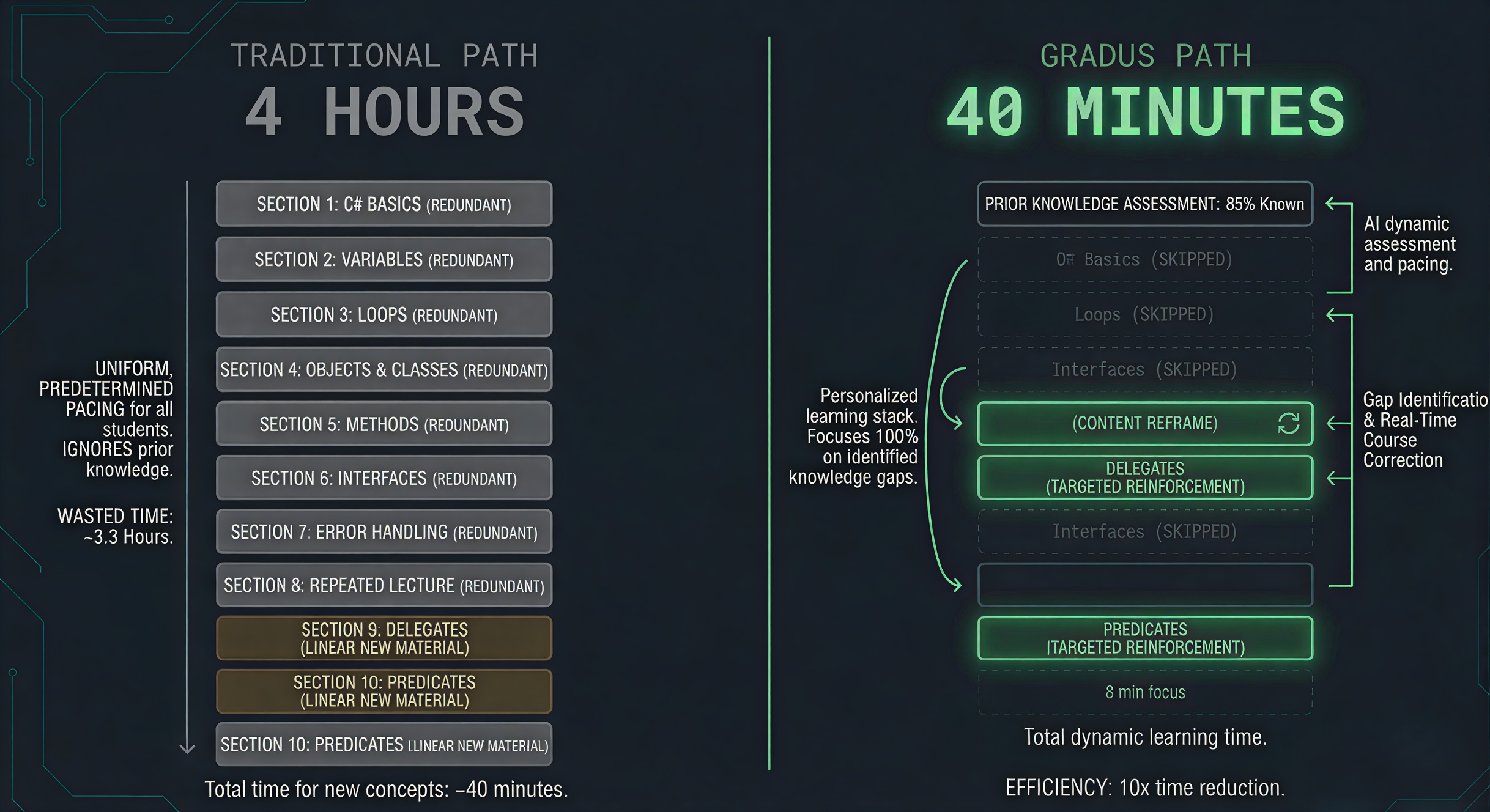 Figure 6: The Efficiency Gap. By surgical identification of gaps and skipping prior mastery, Gradus significantly accelerates the time-to-mastery.
Now scale that to 800 students in a university program, or 3,000 employees across an organization. That is the shift Gradus enables.
Why Now?
Three forces have converged to make this possible in a way that wasn't feasible a decade ago. First, the explosion of open educational content—millions of hours of high-quality video across every domain—has eliminated content scarcity as a bottleneck. Second, advances in AI now enable real-time interpretation of complex behavioral and conceptual signals at scale, something that previously required a human tutor in the room. Third, the bottleneck in learning has fundamentally shifted: the problem is no longer finding knowledge—it's making it stick. Gradus exists at the intersection of all three.
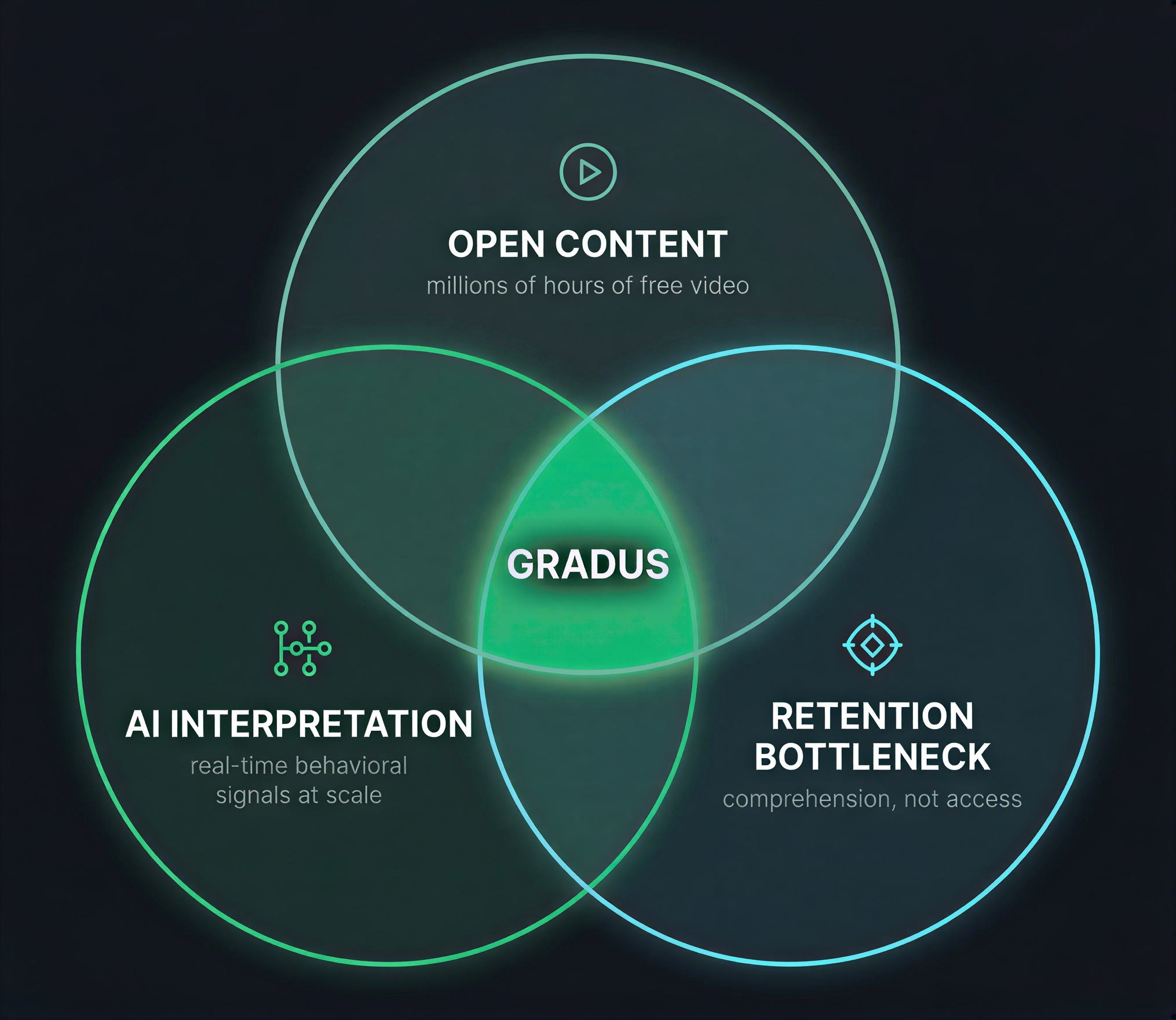 Figure 7: Why Gradus, why now? We sit at the intersection of content abundance and the AI's ability to interpret human cognition at scale.
The Larger Vision: An Intelligent Layer
We view Gradus as more than a learning platform; it is an intelligent layer that sits between content and comprehension, between knowledge and application. Whether it is a student mastering a new domain, an institution improving academic outcomes, or an organization building internal capability, the goal remains the same.
In a world with unlimited access to information, the real challenge is no longer finding knowledge—it is making it meaningful.
Gradus ensures that knowledge is not just accessed—but understood, retained, and applied.
Where traditional systems ask: "How do we deliver this content to everyone?"
Gradus asks: "How should this learning experience evolve for each individual?"
If you're building something in this space, leading a team that trains at scale, or simply frustrated by how broken the current model is — let's talk.